

The Universal Translator for Plug-and-Play Devices
Plug something in, and within a second your computer knows what it is and how to talk to it. That little feat of engineering is the USB driver stack at work.
What the USB Stack Does
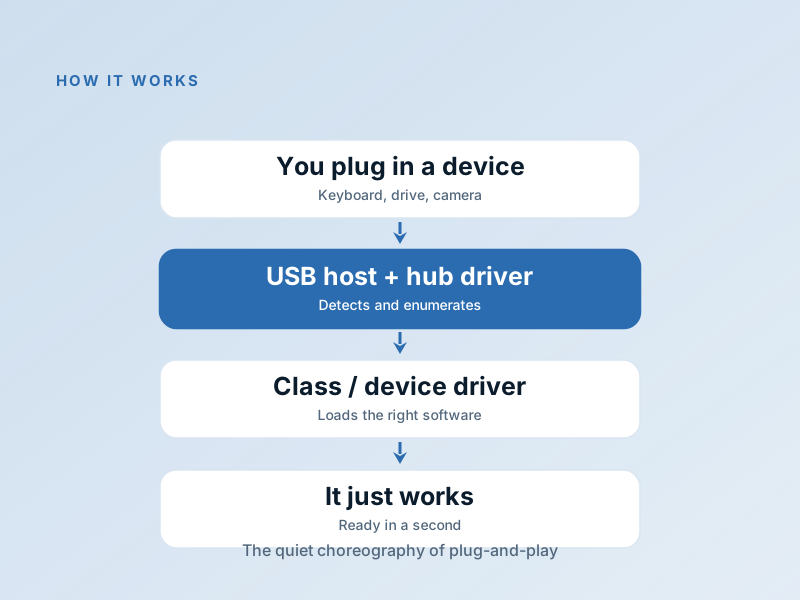
When you connect a device, a chain of drivers springs into action: a host-controller driver manages the physical port, a hub driver tracks what's attached, and a class or device driver knows how to speak to that specific kind of hardware — a keyboard, a drive, a camera.
Together they enumerate the device, assign it resources, and load the right software so it simply works, often with no action from you at all.
- Detects and enumerates newly connected devices
- Loads the correct class or device-specific driver
- Manages power delivery and port resources
- Supports hubs, daisy-chaining, and hot-plugging
When a Device Isn't Recognised
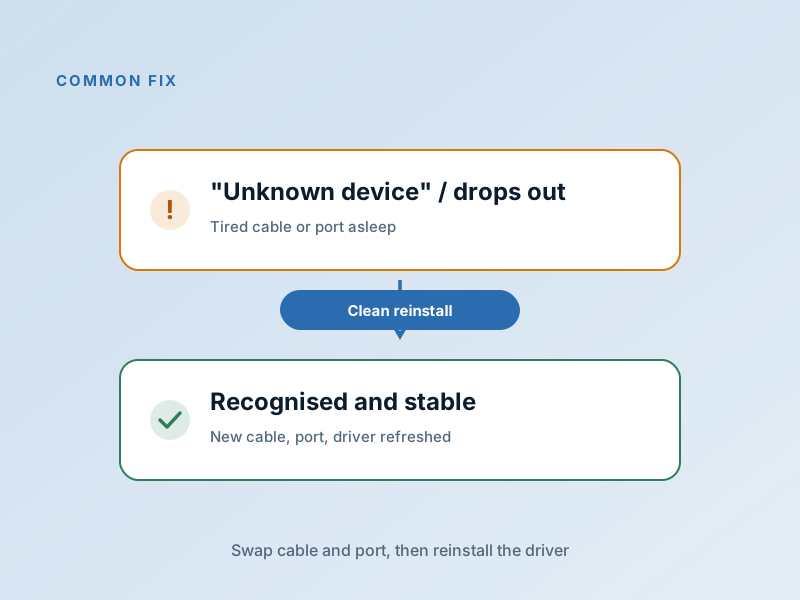
An unknown-device error, a drive that mounts then vanishes, or a port that charges but won't transfer data — these point to the USB stack rather than the gadget itself.
Trying another port, reseating the cable, and reinstalling the device-specific driver from its maker clears up most cases. A surprising number are simply a tired cable or a port stuck in a low-power state after sleep.
Fix it in five careful steps
- Swap the cable — Cables fail far more often than ports or drivers do — always try a known-good cable first.
- Try a different port — Move from a hub or front-panel port to one directly on the machine itself.
- Reinstall the device driver — Uninstall the device in Device Manager, unplug it, restart, then reconnect it.
- Update the controller driver — Install the chipset / USB controller package from your machine's maker — it underpins every port.
- Disable selective suspend — If a device drops out after idle periods, turn off USB selective suspend in your power options.
If anything here feels out of your depth, that's a normal feeling — a local technician can run this exact routine in minutes. Nothing on this page requires special tools.
Common Device Manager codes for this category
USB problems come with their own set of Device Manager codes. The usual suspects, decoded:
| Code | What it means in plain English | The usual fix |
|---|---|---|
Code 43 | A device on this port misbehaved and was stopped. | Try another cable and another port, then reinstall the device's driver. |
Code 28 | No driver is installed for the device. | Install the maker's driver for your operating-system version. |
Code 45 | The device was disconnected, or the port lost it. | Reseat the connection and replace marginal cables — they fail far more often than ports. |
Code 10 | The device cannot start. | Uninstall it in Device Manager, unplug, restart, then plug it back in. |
Frequently Asked Questions
The questions readers send us most about this topic.
My USB device shows as 'unknown'. What does that mean?
The computer sees something connected but can't load a matching driver. Try a different port and cable first, then install the device's own driver from the manufacturer.
Why does my external drive keep disconnecting?
Usually USB power management putting the port to sleep, or a marginal cable. A current driver plus disabling 'USB selective suspend' for that controller resolves most repeat disconnects.
Do I need to 'safely remove' USB drives?
For storage devices it's still good practice: it flushes pending writes so files aren't corrupted mid-save. For mice, keyboards, and similar devices, just unplug.
Want us to explain another driver topic?
Our friendly overview covers every major hardware category — from the device on your desk to the chips inside your laptop.